Lynn Donoghue Biography
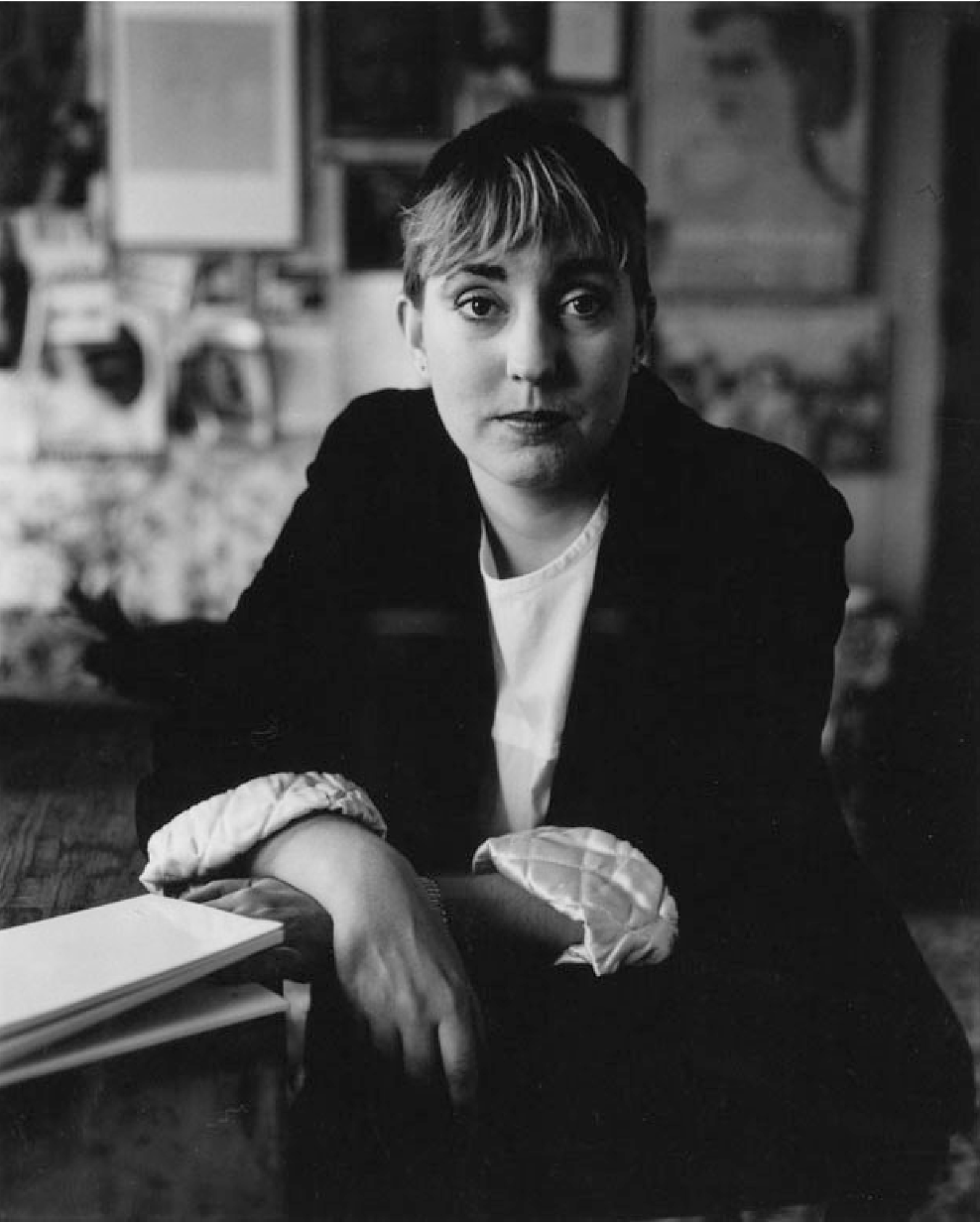
Lynn Donoghue was a Canadian painter known for her astute observation of Canadian cultural figures, including her friends, family and lovers. By combining her own lived experience with a deep knowledge of art history, she was a forerunner of today’s artistic discourse on feminism, gender identity and relationships. Her works are held in major public and private collections across Canada. She was a veteran of more than seventy shows, both solo and group, in a career which lasted from 1973-2003.
Donoghue was born in 1953 in the Ontario mining town of Red Lake, and she later lived in Toronto, New York, London and Bath. She grew up in a dysfunctional family; both Donoghue and her older sister left home early and would be separated for most of the rest of their lives.
On a school trip at the age of fourteen, she persuaded her teacher to let her leave the group to visit museums. She decided to become an artist that day when she saw a Henri Matisse exhibition, whose work remained a continuing influence. She chose not to attend university, and her only formal art training was at HB Beal Secondary School in London, Ontario, graduating in 1972. Although self-taught, she later became a highly literate and influential university educator, teaching at five Canadian universities during her career.
Toronto was the centre of her practice from 1973 until her death. She had one child in 1989, whom she painted often, and recorded her role as a mother in another recently discovered series of seven paintings, Motherhood, 1989-90. She had a tumultuous private life, marrying three times: to the artist Richard Bonderenko, to the plumber Bill Bromley, and to the poet Victor Coleman. Donoghue painted both Bromley and Mimmo Langiano, who lived downstairs from her and was the father of her child, although no paintings of Coleman survive.
As a single mother and breadwinner, determined to be self-sufficient, she found resourceful and entrepreneurial ways to stabilize her often precarious finances. Initially supplementing her income by working as a bookkeeper and by teaching, she later bartered works for materials and services and staged her own pop-ups in then-unlikely venues.
Despite financial constraints, travel was an important influence on her body of work. While living in New York in the late 1970’s, she met both Alex Katz and Alice Neel, who reinforced her decision to pursue painting the figure. Later influences on her work can be traced directly to works at the National Gallery and the Courtauld Gallery in London, the Musée Quai d’Orsay in Paris and the Prado in Madrid. She also created works while teaching at artists’ residencies in Alberta, Saskatchewan, Northwest Territories and Botswana.
She entertained her artistic community at legendary dinner parties, her cooking craft indivisible from art and would be considered performance art today. She was elected a Member of the Royal Canadian Academy of the Arts in 1991, co-founded the Steam Whistle Arts awards in 2003, served as a board member of the Historic Houses of Toronto and was a recipient of the Queen’s Golden Jubilee Medal in 2002.
The artist suffered from poor mental and physical health and passed away in Toronto in 2003 at the age of fifty shortly after installing her work, The Last Supper, 2003.